Liquor License Quota States Explained (2026): the 13 Capped States
In a quota state the license stops being a form you file and becomes an asset you buy. Here is what that means.
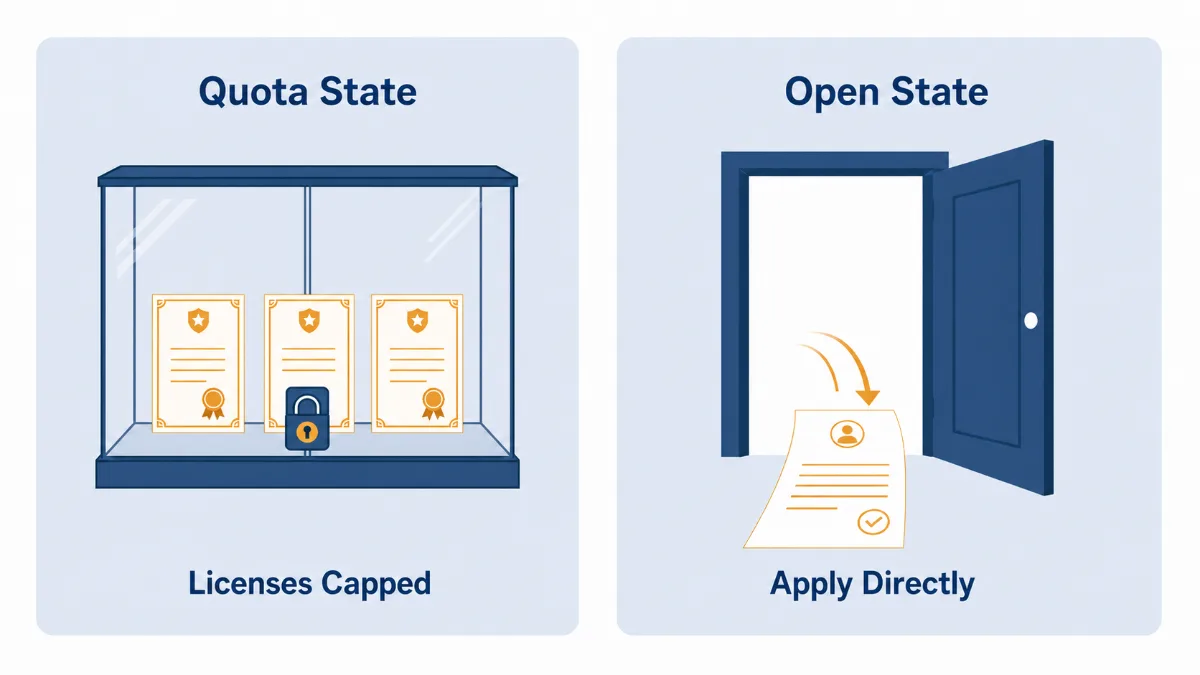
The single fact that reshapes a liquor-license budget more than any other is whether your state runs a quota. A quota caps how many licenses can exist, so in a capped jurisdiction the license stops being a form you file and becomes an asset you buy. An owner who budgets a few hundred dollars in state fees can find the license itself trades for six figures. This guide explains what a quota is, which states run one and what it means for a first-time applicant.
What a quota actually does
Most quotas work on a population ratio: one license for every set number of residents, counted by the latest census. Once a county or a city holds its full allotment, the authority issues no new licenses of that class. New ones appear only as the population grows. They are awarded by a drawing or an auction rather than first-come filing. The practical result is a secondary market: existing licenses change hands between a willing buyer and seller, subject to the authority approving the transfer. New Jersey runs the tightest ratio in the country at roughly one consumption license per 3,000 residents. Massachusetts still uses a population formula written in 1933, which is why Boston needed a home-rule petition in 2024 to add 225 licenses over three years.
The three tiers of quota
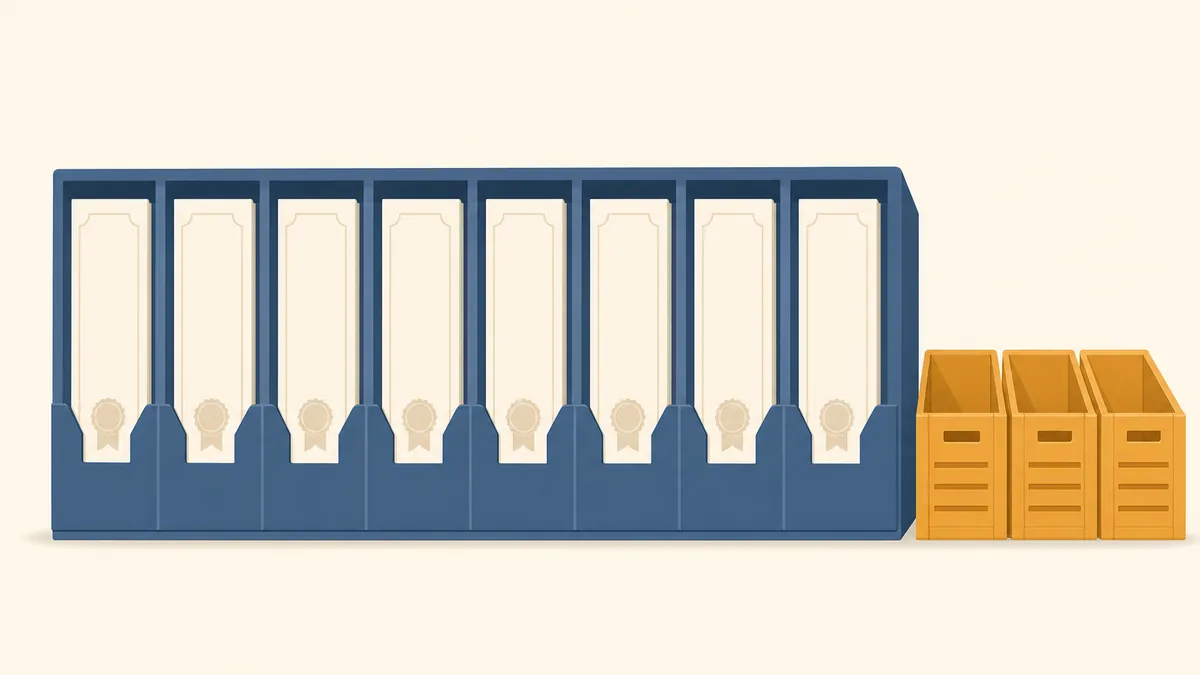
Hard-quota states (13)
A statewide or county cap limits the number of licenses, often the full-spirits or on-sale classes. A new license issues by drawing or must be bought on the secondary market: Alaska, Arkansas, Florida, Idaho, Indiana, Massachusetts, Michigan, Montana, New Jersey, New Mexico, Pennsylvania, Rhode Island, Utah.
Partial-quota states (16)
The cap touches some classes only, usually the full-spirits general or a specific on-sale class, while beer, beer-and-wine or restaurant classes sit outside it, or the quota is set locally by each city or county rather than statewide: Arizona, California, Connecticut, Kentucky, Maryland, Maine, Minnesota, North Dakota, Ohio, South Dakota, Tennessee, Vermont, Washington, Wisconsin, West Virginia, Wyoming. California is the clearest example: a beer-and-wine restaurant applies directly and cheaply, while a full-spirits general license in a capped county goes through the state's annual priority drawing.
No-quota states (22)
The remaining states set no cap on the number of retail licenses, so a qualifying applicant applies directly, subject to local approval and the background check. Low fees do not always mean open entry, though: Wisconsin and Michigan are inexpensive states that still cap specific classes by population, so it pays to check your exact class rather than the state's reputation.
See where your state stands
From the team behind this library
The Liquor License Application Kit
Want the whole path in one place? The Liquor License Application Kit hands you the done pieces for your state: the 51-jurisdiction directory and state selector, the license-class decoder, the dependency-ordered filing checklist, the document-gathering organizer, the deadline and public-notice tracker and an honest do-you-need-a-lawyer decision guide.
The secondary market, in plain numbers
Where a quota is full, the license price is set by the local market, not the state. Reported figures reach $100,000 to $400,000 or more in high-demand California counties such as Los Angeles and San Francisco, run into the hundreds of thousands to over a million in New Jersey and land well into five and six figures in Boston and in high-demand Florida counties. A South Dakota on-sale license sold for $450,001 at a Sioux Falls sealed-bid sale in 2024. Treat every one of these as market-reported between private parties, never as an official fee. Your state page states whether your class is capped and how a transfer works.
What a resale market actually is and why nobody can quote you a price
A resale market for liquor licenses exists for one reason: a fixed local supply meeting demand that keeps moving. When a jurisdiction hits its cap the authority stops issuing, so the only license available is one somebody already holds. From that point the price is set between a private buyer and a private seller, the same way a taxi medallion or a fishing quota is priced. The state's role shrinks to approving or refusing the transfer of the license to the new owner.
That is also why almost nobody can give you a reliable number. In most quota states the alcohol authority approves transfers without recording, tracking or publishing what changed hands. New Jersey is the clearest case: no division database holds sale prices, so every dollar figure circulating for a New Jersey license comes from press coverage or from brokers rather than from a government source. California is the same. Those figures may be broadly right; they simply cannot be checked against a primary source, which is why this library labels them market-reported every time it repeats one.
The one state that publishes real numbers
There is a genuine exception worth knowing about. Montana runs its quota openings as state auctions and its Department of Revenue posts the results, which makes Montana the one place where a published, official transaction price exists rather than an estimate. The department sets each minimum bid at 75 percent of its own assessment of market value for comparable licenses in that quota area, then publishes the winning bid. Recent awarded results include a beer and wine license in Belgrade at a $205,500 minimum closing at $315,000, a beer and wine license in Bozeman at a $165,000 minimum closing at $365,000, a restaurant beer and wine license in Ennis at a $22,375 minimum closing at $38,333 and a beer and wine license in Clyde Park at a $14,500 minimum closing at $20,550. The department separately publishes a purchase price report logging ordinary ownership transfers.
Two things are worth taking from that. The spread is enormous inside one state, from five figures in a small town to seven for an all-beverages license in a resort market, so any single national average is close to meaningless. And even a beer-and-wine class, the one usually described as the affordable route, carries a six-figure entry price in a tight market. Montana's numbers are past auction outcomes rather than a price list, so they describe what happened rather than what a future license will cost.
How a transfer runs
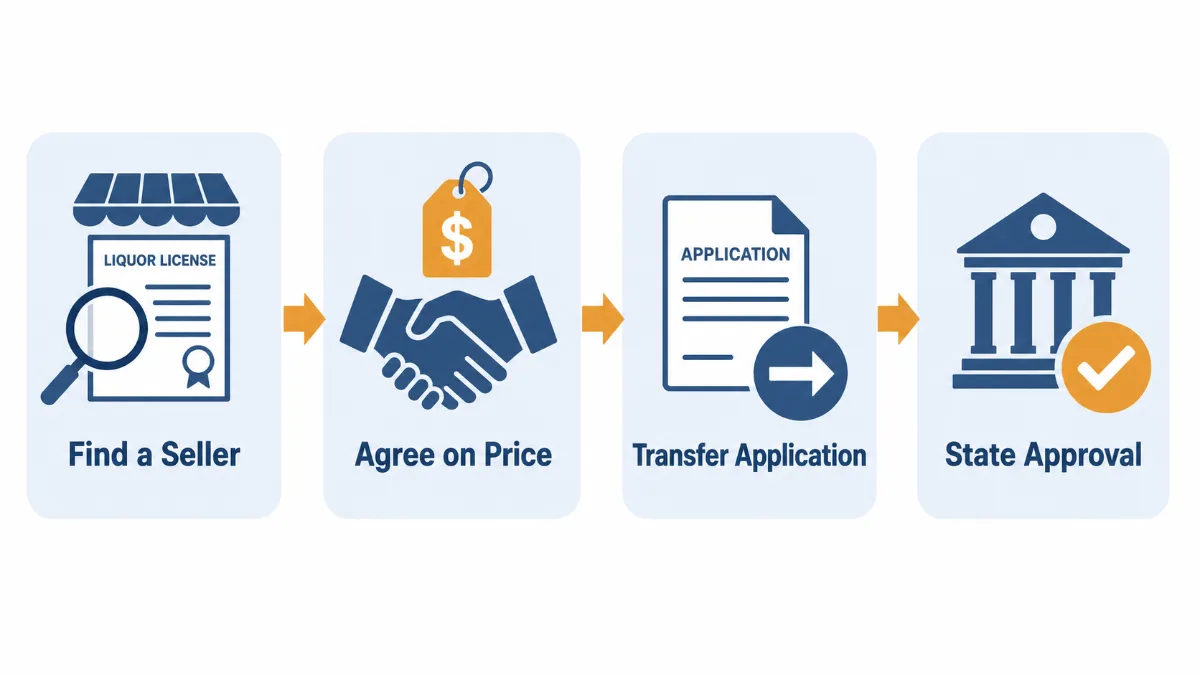
The mechanics are similar across quota states even where the price is invisible. The buyer and the seller agree terms privately. The purchase price commonly goes into escrow before the transfer application is filed. In California a notice of intended transfer is recorded with the county recorder. The application then goes to whoever holds the issuing power, which in New Jersey is the municipality rather than the state. That body must find the buyer qualified, which includes reviewing where the purchase money came from. Only then does the license move. Two clocks run here rather than one: the private sale, then the public approval. In New Jersey the local authority has 60 days to act on a transfer application, after which inaction can be treated as a denial and appealed to the state division.
This guide is educational information, not legal advice. Quota rules and license prices change; the resale figures are market-reported, not official fees. Confirm the current rules with your state before you rely on any of it. Treat a quota-state purchase as a matter for a licensed attorney.
Quota states FAQ
What is a liquor license quota?
A quota caps how many retail liquor licenses can exist in a jurisdiction, usually one license per set number of residents or a fixed count set by the city, county or state. Once the cap is reached, the authority issues no new licenses of that class, so a would-be operator buys an existing license from a current holder and applies to transfer it, rather than getting a brand-new one.
Which states are quota states?
Thirteen states run a hard quota that caps licenses statewide or by county: Alaska, Arkansas, Florida, Idaho, Indiana, Massachusetts, Michigan, Montana, New Jersey, New Mexico, Pennsylvania, Rhode Island and Utah. Sixteen more cap only certain classes, most often the full-spirits or on-sale general class, while beer and wine classes sit outside the cap. The remaining twenty-two states set no cap at all.
Can you still get a liquor license in a quota state?
Yes, usually by one of three routes: buy an existing license and transfer it, apply for a class that sits outside the quota (often a beer-and-wine or restaurant license), or enter the state or county drawing when a new license opens up as the population grows. Which routes exist depends on the state and the class. Every transfer still needs the authority to approve the buyer.
How much does a quota license cost?
The state fee is not the story. Where a quota is full, the license itself trades privately: market-reported prices run into six figures in high-demand California counties and into the hundreds of thousands or more in New Jersey. A Sioux Falls, South Dakota on-sale license reached $450,001 at a 2024 sealed-bid sale. These are market-reported figures between private parties, never an official state fee.