Is It Hard to Get a Liquor License? (2026): the Five Factors
"Hard" is not a property of a state. It comes down to five factors. Only one of them, the quota, makes a license genuinely scarce.
"Hard" is not a fixed property of a state. Whether a first-time license is quick paperwork or a long, costly process comes down to five factual factors. Only one of them, a full quota, makes a license genuinely scarce rather than just a matter of time. This page walks the five so you can read your own situation instead of trusting a one-word verdict.
We do not rank states from easy to hard, because the same state can be simple for a beer-and-wine cafe and difficult for a full-spirits bar in a capped county. What follows is the five things that actually decide it, each a fact you can look up for your own state, not an opinion about the state as a whole.
Factor 1: is the state a quota state?
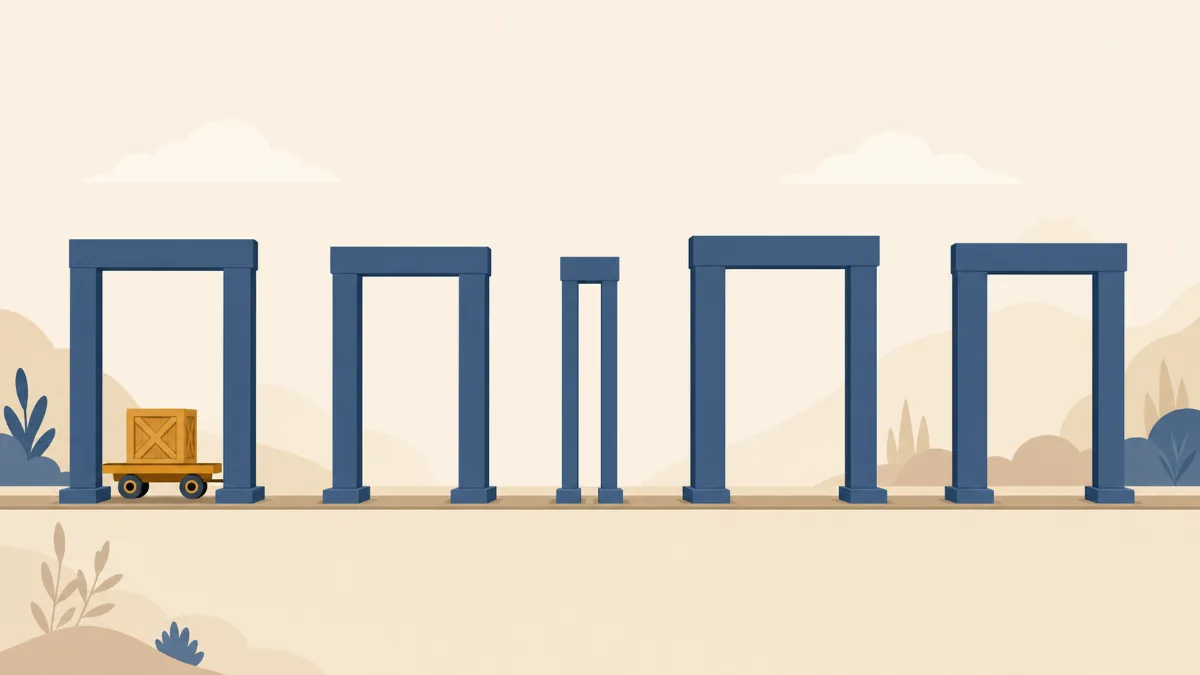
This is the one factor that can make a license genuinely scarce rather than just slow. In a quota state the number of retail licenses is capped, usually by population, so once a county is full a first-time operator buys an existing license from a current holder and transfers it rather than getting a new one. That existing license can trade privately for five or six figures, which is the real source of the "hard to get" reputation. The cap usually falls on full-spirits classes; a beer-and-wine class often sits outside it. Thirteen states run a hard quota and sixteen more cap certain classes. The quota states guide lists them.
Factor 2: is it a control state?
In a control state the government itself runs some or all spirits sales, so a private full-spirits package store may not exist at all. That is not difficulty so much as a door that is closed for one business model and open for others: you can still sell beer and wine at retail. A bar can still pour spirits by the drink. Six states run full control and thirteen more run partial control. The control states guide explains which private classes exist in each.
Factor 3: the cost band
State and local fees run from about $50 for a small beer license to $10,500 for a full-spirits class in the higher-fee states, with California's priority-drawing general license an outlier near $20,000 in first-year state fees. The fee itself rarely makes a license "hard". The six-figure private price of a license in a capped county does. The cost-by-state guide separates the two layers and the cost estimator reads your state's own band.
Factor 4: the timeline
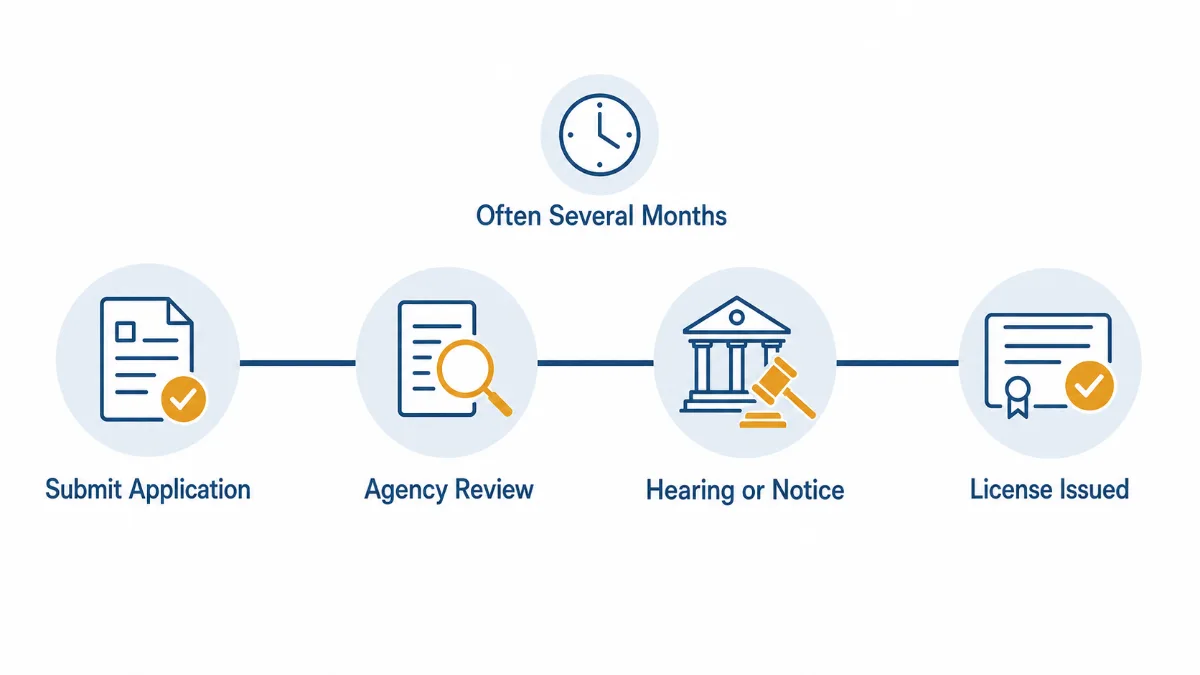
A complete application clears in about 10 to 21 days in the fastest states, while a state investigation commonly runs 55 to 90 days elsewhere. A quota drawing or a private purchase adds far more on top. The wait is a factor, not a barrier. Most of it is fixed by the state's own schedule and the public-notice window rather than by how hard you push. The estimator shows the typical window for your state.
See the five factors for your state
From the team behind this library
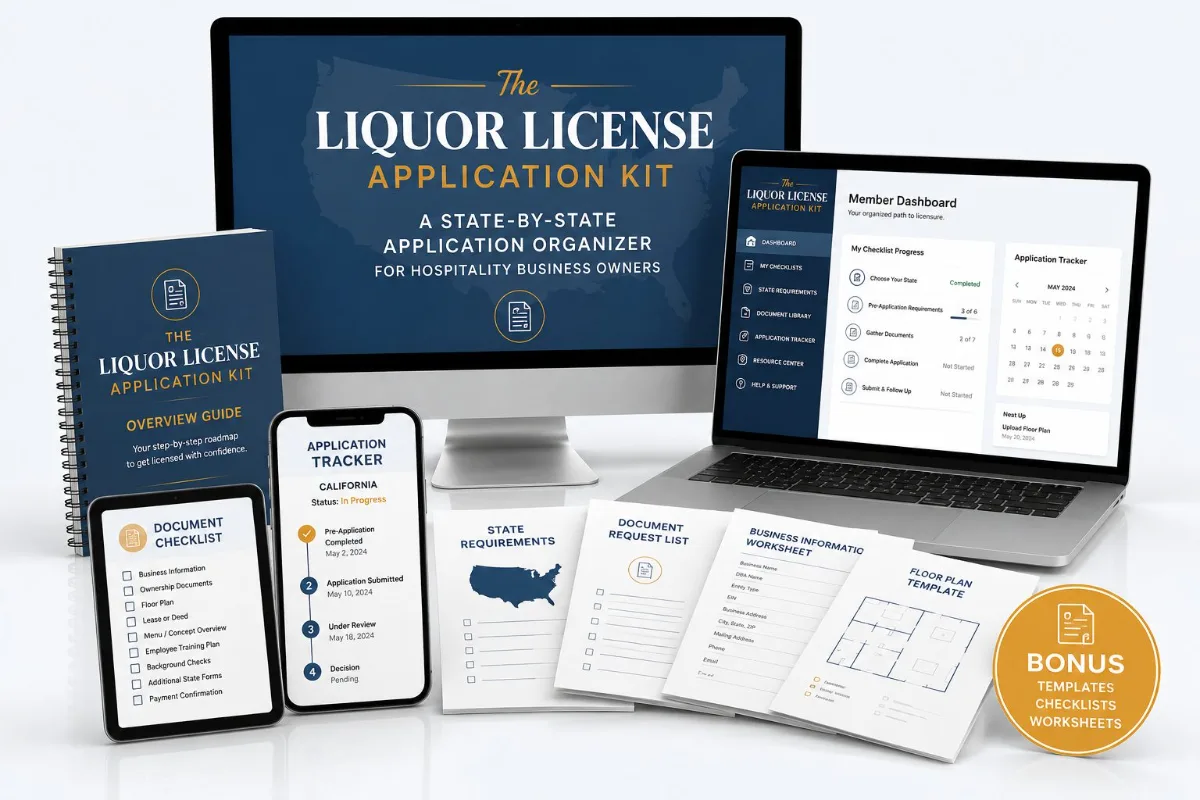
The Liquor License Application Kit
Want the whole path in one place? The Liquor License Application Kit hands you the done pieces for your state: the 51-jurisdiction directory and state selector, the license-class decoder, the dependency-ordered filing checklist, the document-gathering organizer, the deadline and public-notice tracker and an honest do-you-need-a-lawyer decision guide.
Factor 5: the background check and eligibility
A fingerprint-based background check on the owners and officers is close to universal. A recent felony, a crime involving alcohol or moral turpitude or a false statement on the application can disqualify. Most states weigh a conviction case by case rather than as an automatic lifetime ban. Several look back only a set number of years. The how-to-get guide covers the common disqualifiers and the felony question.
So is it hard? Put the five together
Line the five factors up for your own situation and the honest answer appears on its own. A beer-and-wine cafe in a no-quota, non-control state with clean owners is mostly organizing documents and waiting out the review. A full-spirits bar in a capped county is a long and expensive process. The reason is the quota, not the paperwork. The one that makes a license truly scarce is the quota; the rest are time, money and documents you can plan for.
Is it hard in my state?
The "is it hard in my state" question is really "which of these five factors apply to my state". Texas and New York set no quota, so a license there is mostly a timeline-and-documents question. Florida runs a quota, so a full-spirits license there turns on the secondary market. North Carolina is a control state, so a private off-premise spirits store is off the table while beer and wine stays open. Nevada issues locally with no state cap, so the answer sits with your city or county. Open your state page for the five factors filled in with real numbers.
This guide is educational information, not legal advice and it does not tell any applicant what to do. It describes the factors that shape the process as neutral facts; it does not rate any state or predict your outcome. Confirm the current rules with your state before you rely on any of it. For a contested application or a quota-state purchase, talk to a licensed liquor-license attorney.
Is it hard to get a liquor license FAQ
Is it hard to get a liquor license?
It depends on five factual factors, not on the state alone: whether the state caps licenses by quota, whether it is a control state, the cost band, the timeline and the background check. Only a full quota makes a license genuinely scarce. A beer-and-wine license in a no-quota state is mostly organizing and paperwork. A full-spirits license in a capped county is a long, costly process because of the quota rather than the application itself.
Why are liquor licenses hard to get in some states?
Almost always the quota. Thirteen states cap the number of retail licenses, so once a county is full the only way in is to buy an existing license from a current holder, often for six figures. That scarcity, not the application, is what earns a state its reputation. The cap usually hits full-spirits classes, so a beer-and-wine class often sits outside it and stays straightforward.
What is the easiest state to get a liquor license in?
We do not rank states easy to hard, because the honest answer turns on your class and your county. What we can say factually: a state with no quota and no control structure has no existing license to buy out and no state-run spirits monopoly, so the process there is mostly the local sign-off, the background check and the wait. The estimator shows whether your state carries a quota or a control layer.
Is it hard to get a liquor license in Texas?
Texas sets no statewide quota on retail licenses, so a Texas license is mostly a matter of the documents, the local sign-off and the processing window rather than buying a capped license. It runs on a two-year term. The harder cases anywhere are a quota county or a prior conviction, neither of which is a Texas-wide rule. See the Texas page for the exact classes, fees and steps.